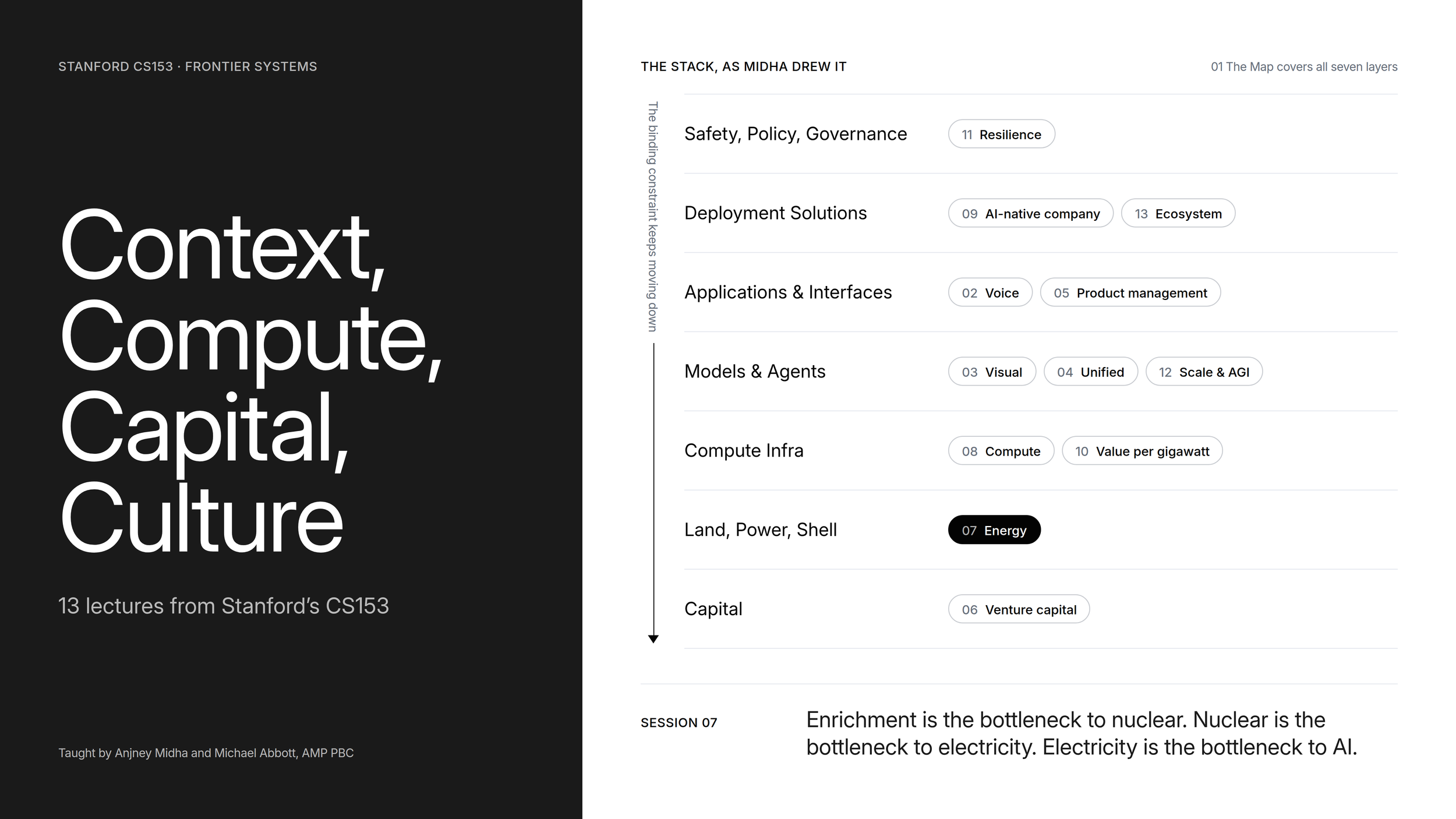
Enrichment is the bottleneck to nuclear. Nuclear is the bottleneck to electricity. Electricity is the bottleneck to AI. That slide came from the 7th of 13 sessions in Stanford's CS153: Frontier Systems. A course about frontier AI spent its midpoint on uranium. I worked through all 13 in September 2026, from Anjney Midha's opening map of the stack to guests from ElevenLabs, NVIDIA, OpenAI and Microsoft. This recap walks the course in order and reads it through the four lenses Midha gave the class: context, compute, capital and culture. It ends on the number I'll carry forward: Google depreciates its compute hardware over six years, and NVIDIA ships a new architecture every year.