
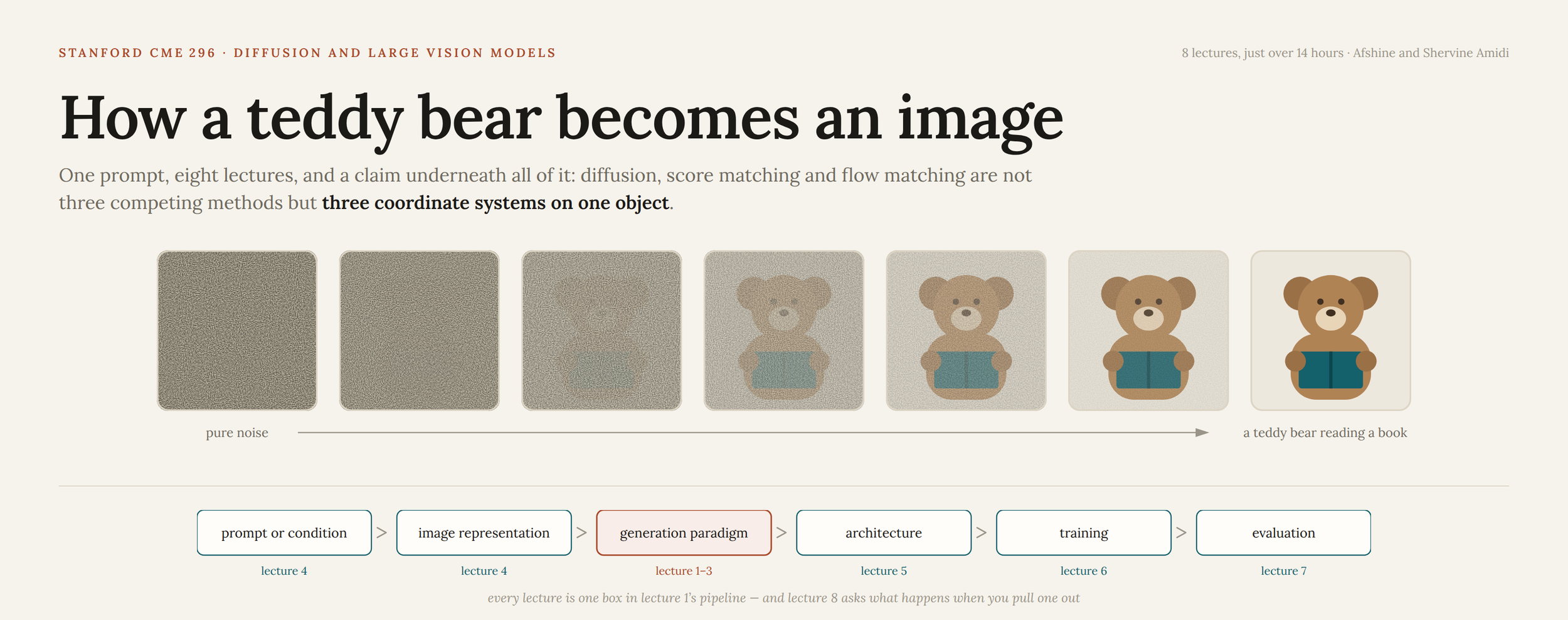
Every lecture in Stanford's CME 296 generates the same picture: a teddy bear reading a book. Noise on the first slide, a finished image on the last. I watched all 8 lectures from Afshine and Shervine Amidi, just over 14 hours of video. The claim underneath them: diffusion, score matching, and flow matching are three coordinate systems on one object. This recap walks the course in order and argues that FID is a regression test the field keeps publishing as a result. One problem won't yield to a better loss, provenance you can strip with a screenshot.